Oral Presentation ESA-SRB-NZSE-CaSR 2026 in conjunction with ENSA
Does continued antihypertensive therapy compromise adrenal vein sampling subtyping in primary aldosteronism? (143880)
Background and aim: Primary aldosteronism (PA) is the most common cause of secondary hypertension, and adrenal vein sampling (AVS) is the gold standard for subtyping[1]. Common antihypertensive agents may affect aldosterone and renin secretion, potentially compromising AVS accuracy. While the impact of mineralocorticoid receptor antagonists (MRAs) has been investigated[2], the effect of other agents remains unclear. This study aimed to determine whether a combination of interfering medications significantly affects AVS interpretation.
Methods: This retrospective cohort study enrolled PA patients who underwent AVS at The Second Affiliated Hospital, Zhejiang University School of Medicine, from June 2018 to June 2025. Patients were divided into interfering and non-interfering (washout) groups based on exposure to any single interfering drug or combination thereof, including beta-blockers, ACEIs, ARBs, CCBs, or MRAs, at the time of AVS. AVS indices, unilateral PA identification rates, and surgical and medical outcomes were compared between groups. The Mann–Whitney U test and Fisher’s exact test were used for continuous variables and proportions, respectively; P < 0.05 was considered significant.
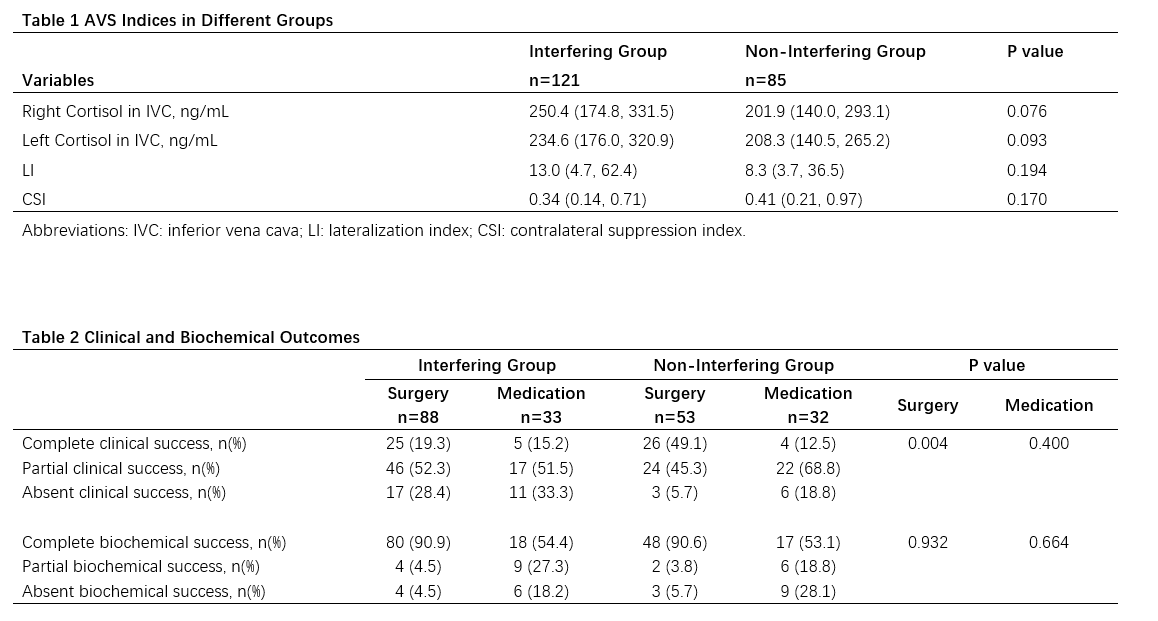
Results: Data from 226 patients (mean age 52.5, 47.3% female; 132 interfering vs. 94 non-interfering) were analyzed. Baseline plasma aldosterone, renin, and blood pressure were comparable between groups, although the interfering group required more antihypertensive agents (P = 0.008). Commonly used AVS indices were also similar between the two groups (Table 1).Lateralizing PA was detected in 84.1% in the interfering group and 79.8% in the non-interfering group. Biochemical outcomes in surgically or medically treated patients (Table 2), and the area under the receiver operating characteristic curve for the lateralization index were similar between the groups.
Conclusion:In patients with PA, continued use of common antihypertensive medications during AVS did not significantly affect the identification of unilateral PA or biochemical outcomes.
- Adler GK, Stowasser M, Correa RR, et al. Primary Aldosteronism: An Endocrine Society Clinical Practice Guideline. J Clin Endocrinol Metab. Published online July 14, 2025. doi:10.1210/clinem/dgaf284
- Pintus G, Seccia TM, Amar L, et al. Subtype Identification of Surgically Curable Primary Aldosteronism During Treatment With Mineralocorticoid Receptor Blockade. Hypertens Dallas Tex 1979. 2024;81(6):1391-1399. doi:10.1161/HYPERTENSIONAHA.124.22721