Oral Presentation ESA-SRB-NZSE-CaSR 2026 in conjunction with ENSA
Single-cell transcriptomic analysis reveals increased tumour cluster dominance and patient-specific divergence in gonadotroph adenoma recurrence (144063)
Background: Gonadotroph adenomas frequently recur, requiring re-intervention.1 However, there are neither reliable predictive biomarkers nor established medical therapies. We aimed to evaluate the tumour cell composition associated with recurrence in gonadotroph adenomas.
Methods: Spatial transcriptomics2 (Xenium 5000-plex) was performed on nuclei extracted3 from 15 paired primary and recurrent gonadotroph adenomas from 7 patients. Tumour cells were annotated into molecularly distinct clusters and labelled by their top differentially expressed genes. Proportional cell-cluster composition per sample was used to compare cluster composition and dominant-cluster identity between paired primary and recurrent tumours, and assess intra- and interpatient diversity.
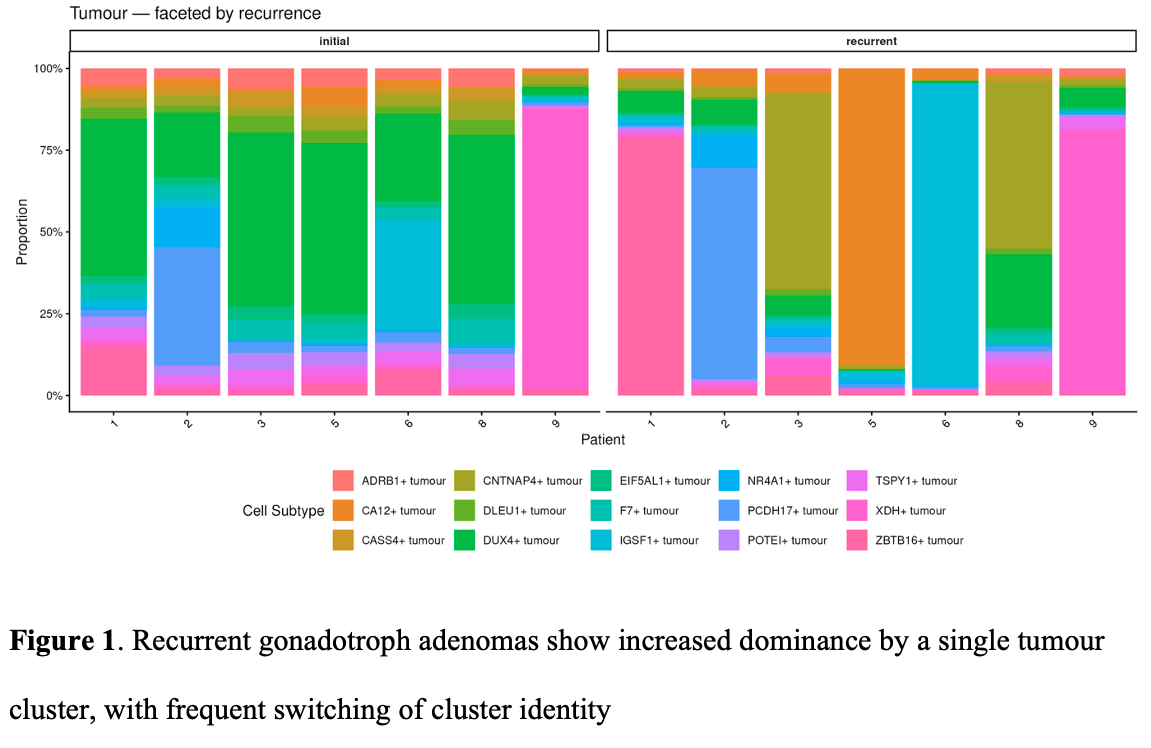
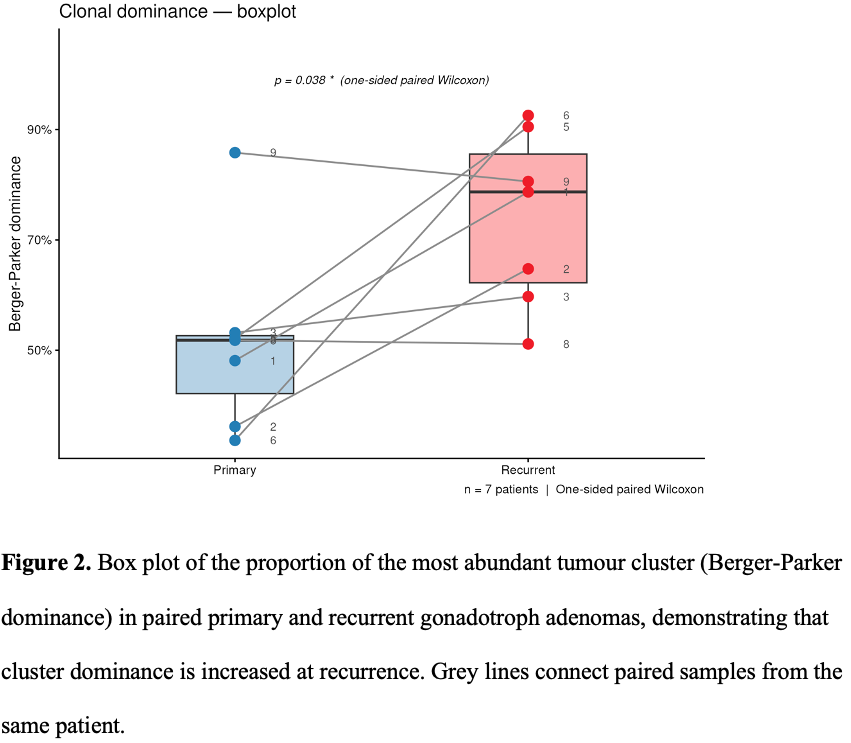
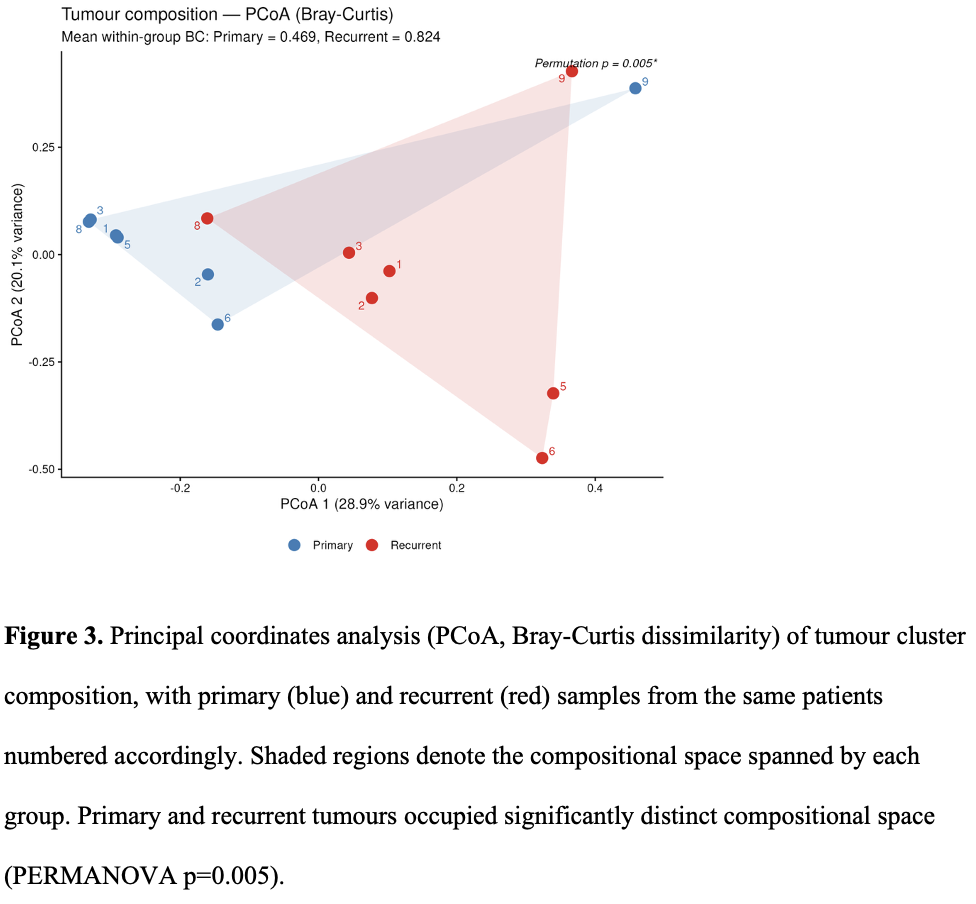
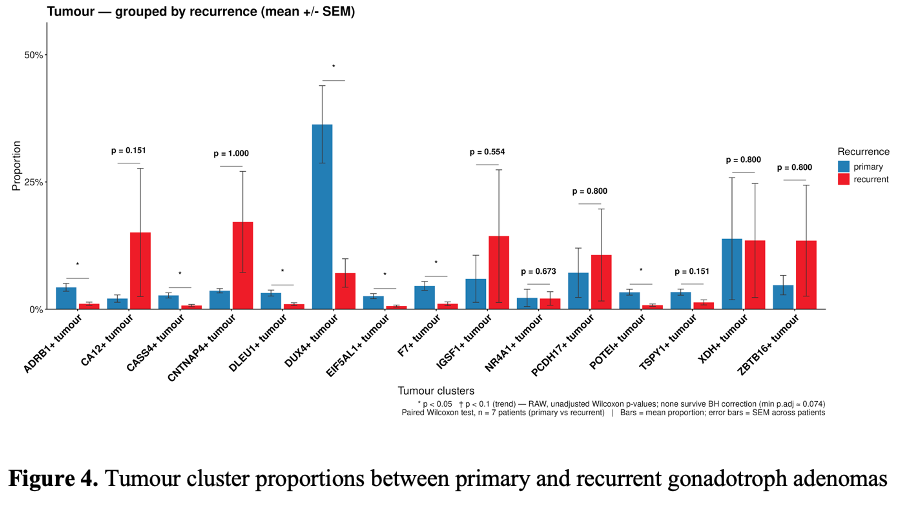
Results: From 586,561 tumour cells, fifteen clusters were identified. The identity of the dominant cluster frequently switched between primary and recurrent disease in the same patient (Figure 1), and the proportion of the most abundant cluster was significantly higher in recurrent tumours (p=0.038, Figure 2), with a corresponding trend toward decreased intra-patient diversity at recurrence (Shannon entropy, p.adj=0.052). Primary and recurrent composition space was significantly separated (PERMANOVA p=0.005), and interpatient compositional divergence was markedly greater among recurrent tumours than primary tumours (Bray-Curtis dissimilarity 0.824 vs. 0.469; permutation p=0.005) (Figure 3). Seven clusters, including DUX4+ (p.adj=0.074), showed a trend towards lower abundance in recurrent tumours; however, no cluster proportion was significantly higher in recurrent than primary tumours in paired analyses (Figure 4).
Conclusion: The significant increase in interpatient diversity and the trend toward reduced intrapatient diversity were driven by increasing dominance of a single cluster whose identity varied between patients and frequently switched between primary and recurrent tumours within the same patient. Recurrence was characterised by a trend for loss of clusters present in primary tumours (DUX4+ foremost); however, no cluster showed significant gain specific to recurrence. Together, our findings suggest recurrence is characterised by selective, patient-specific attrition rather than a convergent molecular recurrence pathway.
- Hussein Z, Grieve J, Dorward N, et al. Non-functioning pituitary macroadenoma following surgery: long-term outcomes and development of an optimal follow-up strategy. Frontiers in Surgery. 2023;10.
- Pitino E, Pascual-Reguant A, Segato-Dezem F, et al. STAMP: Single-cell transcriptomics analysis and multimodal profiling through imaging. Cell. 2025;188(18):5100-17.e26.
- Wang T, Roach MJ, Harvey K, et al. snPATHO-seq, a versatile FFPE single-nucleus RNA sequencing method to unlock pathology archives. Communications Biology. 2024;7(1):1340.