Oral Presentation ESA-SRB-NZSE-CaSR 2026 in conjunction with ENSA
Targeting HTR2B to enhance β-cell proliferation in porcine islet xenotransplantation for cure of type 1 diabetes (143841)
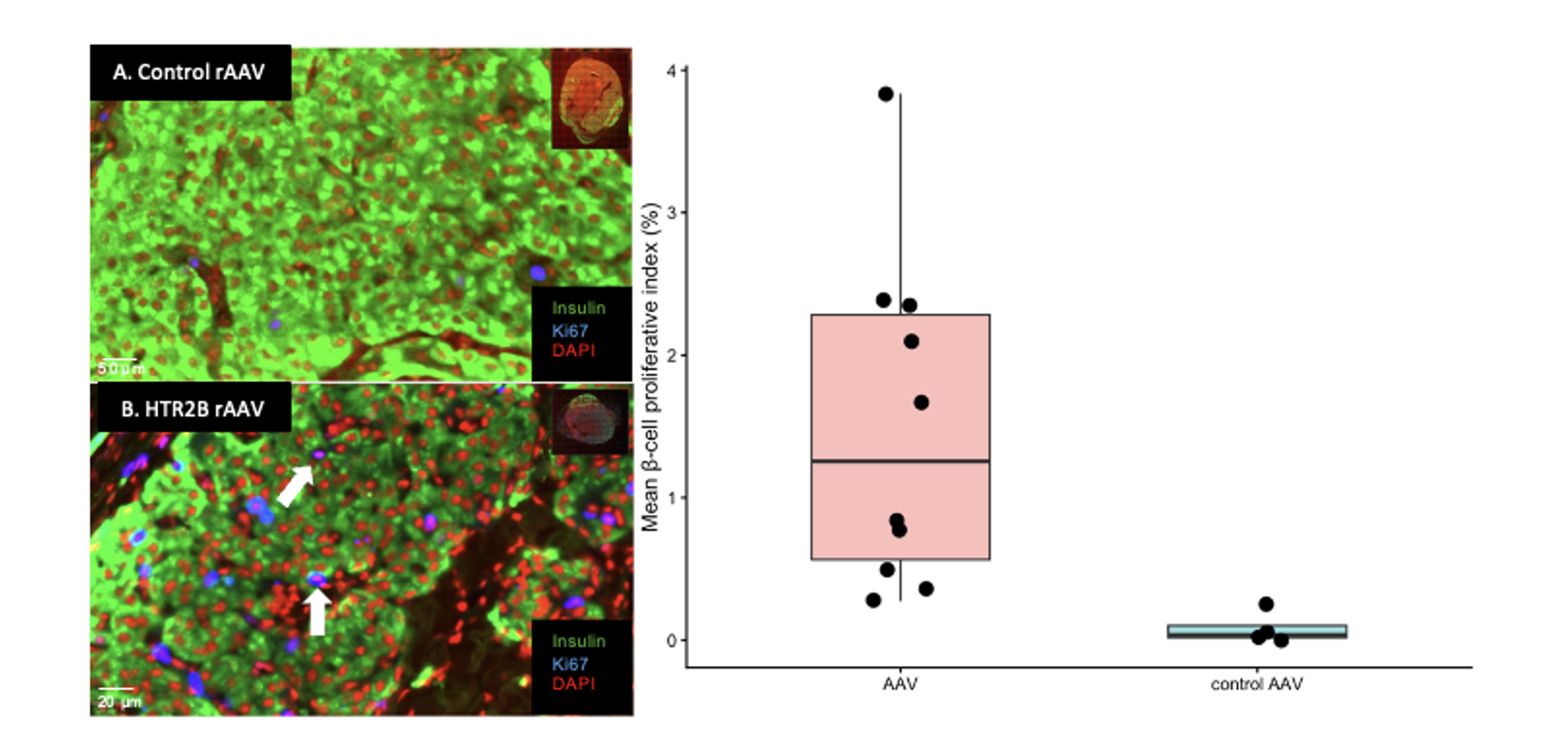 Aims: Type 1 diabetes mellitus (T1D) is an autoimmune disease characterised by pancreatic β-cell destruction (1). Xenotransplantation of neonatal islet cell clusters (NICCs) from pigs (NPICs) offers a promising, scalable source of insulin producing tissue but is limited by poor graft survival and low post-transplant β-cell proliferation (2). However, the serotonin receptor HTR2B has been implicated in β-cell proliferation under certain physiological states (3). This study aimed to determine whether increasing HTR2B expression in NICCs using recombinant adeno-associated virus (rAAV)-mediated gene delivery will increase β-cell proliferation and improve in vivo glucose tolerance, insulin secretion, and islet morphology.
Methods: RAG1-null mice were rendered diabetic (blood glucose levels (BGL) >20mmol/L) using streptozotocin. NICCs were isolated, and transduced ex vivo, with either HTR2B-rAAV or control rAAV (CAG-eGFP-rAAV) prior to transplantation beneath the kidney capsule. Graft function was assessed via serial BGLs, and glucose tolerance testing (GTTs), with graft-dependent glycaemic control confirmed by nephrectomy-induced diabetes recurrence. GTT results were analysed using non-parametric testing. Harvested grafts underwent immunofluorescence staining and confocal microscopy. A proliferative index was calculated per section as a percentage (Ki67/insulin positive area x 100) and averaged over 6 slides per mouse.
Results: Mouse blood glucose levels peaked at 15 minutes post-glucose administration in both groups before declining over time. HTR2B-rAAV-treated mice showed lower blood glucose than controls throughout the GTT, with significant reductions at 60 and 120 minutes (P < 0.05). Mean β-cell proliferative index was approximately 18-fold higher in HTR2B-rAAV-treated grafts than controls (1.51% vs 0.08%, Welch's t = 3.8, df = 9.43, P = 0.004).
Conclusion: HTR2B-rAAV transduction significantly enhanced β-cell proliferation and improved glucose tolerance in transplanted NPICs, supporting HTR2B activation as a promising strategy to improve β-cell transplantation outcomes in T1D.
- Popoviciu, M.S., et al. Type 1 Diabetes Mellitus and Autoimmune Diseases: A Critical Review of the Association and the Application of Personalized Medicine. J Pers Med 13(2023).
- Cooper, D.K.C., Mou, L. & Bottino, R. A brief review of the current status of pig islet xenotransplantation. Front Immunol 15, 1366530 (2024).
- Moon, J., et al. Serotonin Regulates Adult β-Cell Mass by Stimulating Perinatal β-Cell Proliferation. in Diabetes, Vol. 69 205–214 (2020).