Oral Presentation ESA-SRB-NZSE-CaSR 2026 in conjunction with ENSA
Bone to be wild: acromegaly and polyostotic fibrous dysplasia in an adult male with mccune albright syndrome (143542)
McCune–Albright syndrome (MAS) is a rare somatic mosaic disorder caused by gain-of-function mutations in GNAS, leading to constitutive Gαs activation and excess cAMP production. Diagnosis requires ≥2 of: fibrous dysplasia (FD), café-au-lait macules, gonadotropin-independent gonadal dysfunction, nonautoimmune hyperthyroidism, GH excess or neonatal hypercortisolism (1). We describe a young male diagnosed with MAS following incidental discovery of polyostotic FD and features of acromegaly.
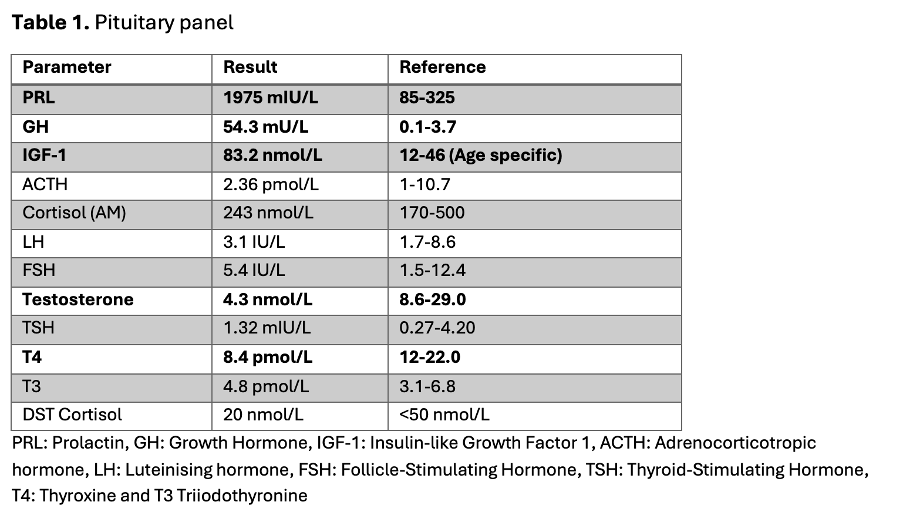
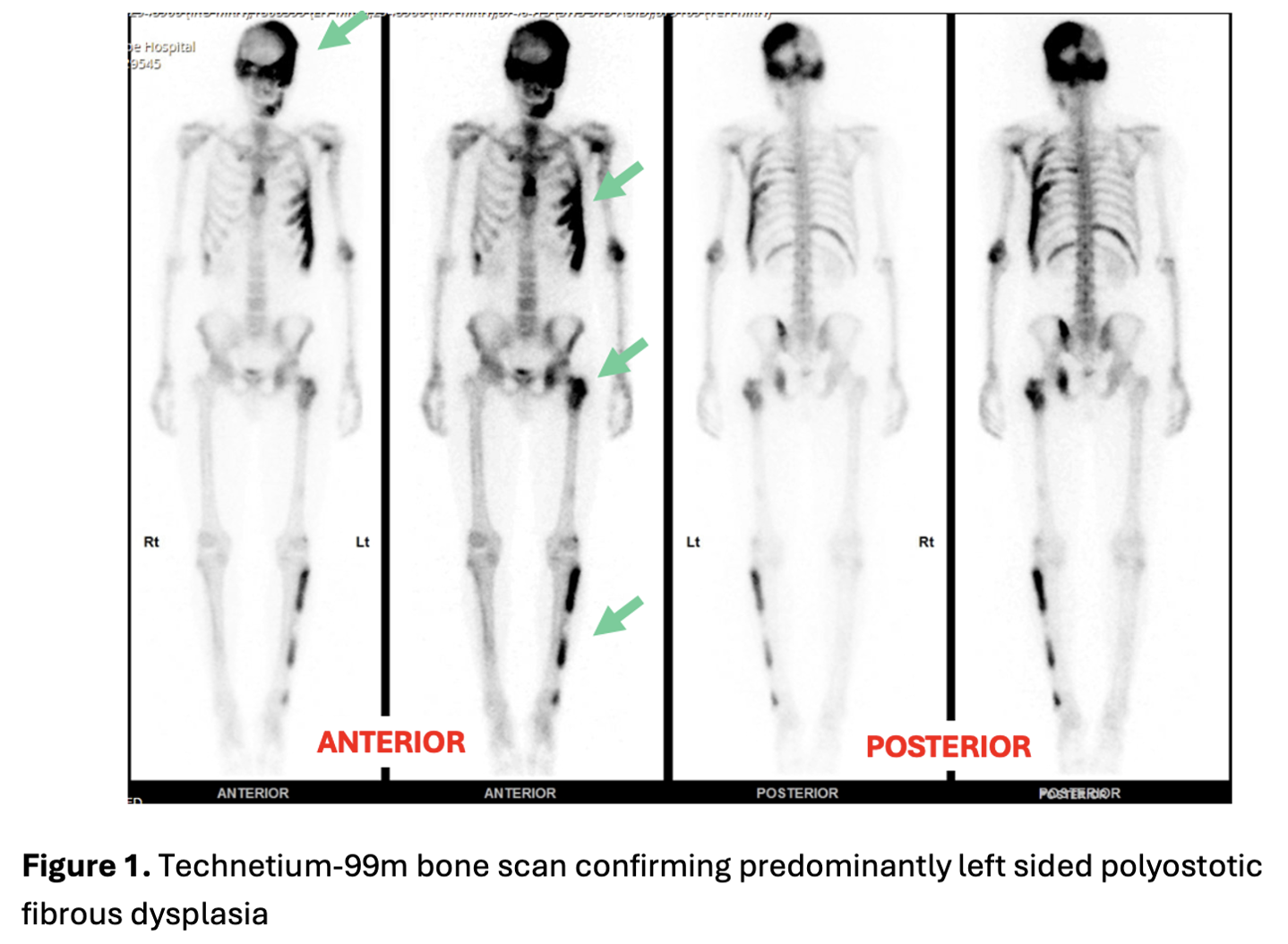
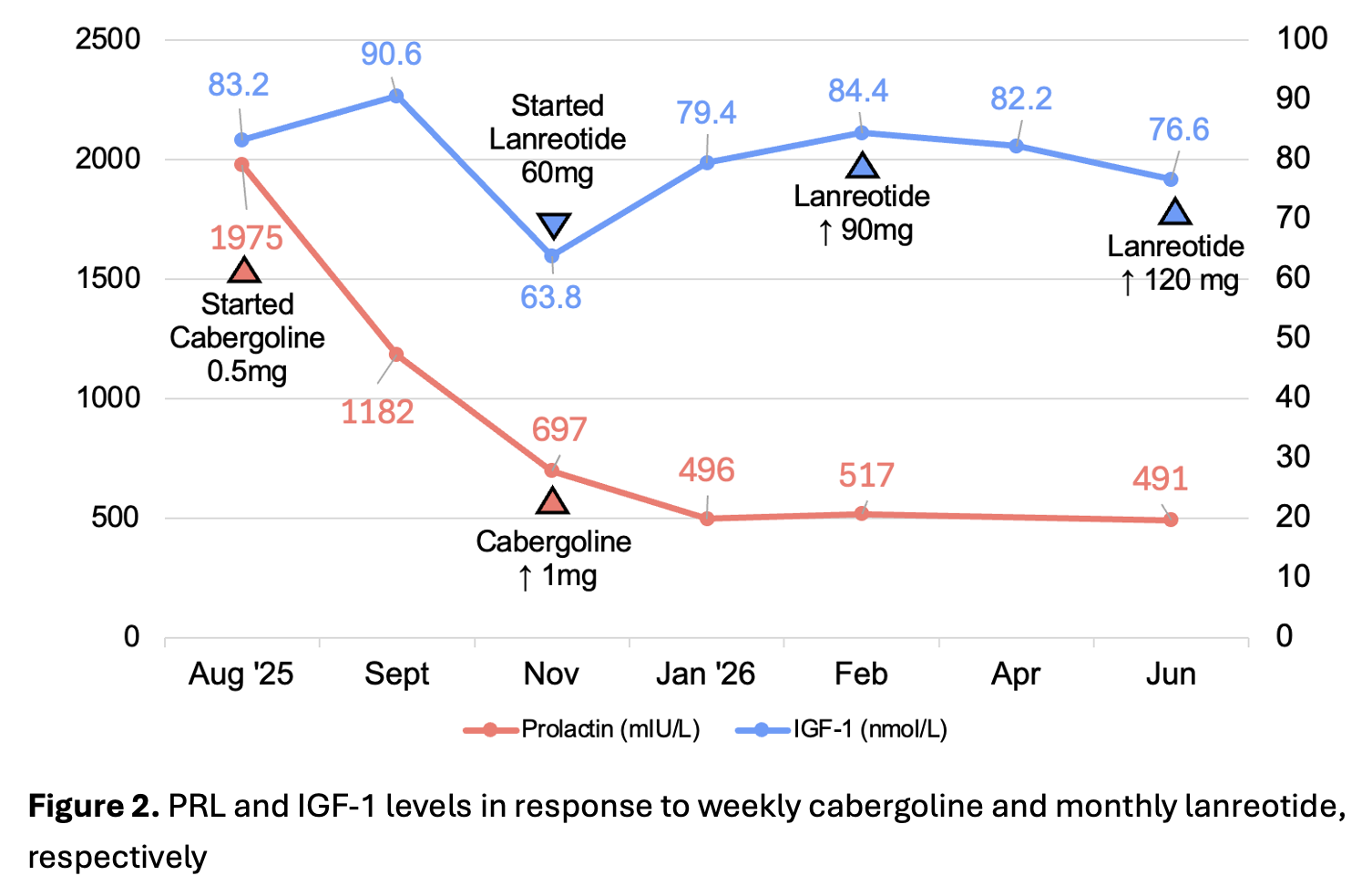
A 35-year-old man was referred to clinic with incidental bony lesions found during investigation of abdominal pain, alongside clinical suspicion of acromegaly. He reported two months of bone pain over the left forehead, ribs and hips. There was no history of pubertal delay, fractures or familial endocrinopathy. Examination revealed frontal bossing, left brow prominence and maxillary prognathism. Investigations showed elevated GH and prolactin, low free T4 with normal TSH, and low testosterone (Table 1). Initial CT imaging showed heterogeneous sclerotic lesions with focal osteolysis in the left hip and femur, and left rib expansion with ground-glass matrix. Technetium-99m bone scan confirmed left-sided polyostotic FD (Figure 1) and PET-FDG showed diffuse uptake in the same regions without metastasis. Pituitary MRI revealed diffuse enlargement (18.7×10.8×12.3mm) without a discrete adenoma. A clinical diagnosis of MAS was made based on GH excess and polyostotic FD. Treatment was commenced with oral cabergoline weekly and subcutaneous lanreotide monthly. Although prolactin improved along with normalisation of testosterone, IGF-1 remained difficult to control despite dose escalation (Figure 2). IV pamidronate was commenced for bony pain, with six-monthly infusions planned. Pain and quality-of-life scores had mild improvements at 3-month follow-up.
We present an interesting case of MAS following incidental findings of polyostotic FD on radiological imaging. This case highlights the importance of screening for extraskeletal manifestations in any patient presenting with FD and we discuss management challenges including MAS-associated acromegaly and FD-related bone pain.
- Javaid, M. K., Boyce, A., Appelman-Dijkstra, N., Ong, J., Defabianis, P., Offiah, A., ... & Collins, M. T. (2019). Best practice management guidelines for fibrous dysplasia/McCune-Albright syndrome: a consensus statement from the FD/MAS international consortium. Orphanet journal of rare diseases, 14(1), 139.