Oral Presentation ESA-SRB-NZSE-CaSR 2026 in conjunction with ENSA
CASRdb: A Comprehensive Database for Disease-associated Calcium-sensing Receptor Variants (138564)
The calcium-sensing receptor (CaSR) plays a critical role in calcium homeostasis. Inactivating variants in the CASR gene cause familial hypocalciuric hypercalcemia type 1 and neonatal severe hyperparathyroidism, whereas activating variants cause autosomal dominant hypocalcemia (ADH) type 1 and ADH with Bartter syndrome. Genetic testing for CASR is important for confirming the diagnosis of these disorders. As the McGill’s CASRdb is no longer available(1), we developed an updated CASRdb, a publicly accessible database and interactive website of disease-associated CASR variants curated from literature and genomic databases.
We performed a systematic review of published reports of CASR variants in association with CaSR-related disorders in Embase/PubMed. We also identified supporting references for pathogenic/likely pathogenic (P/LP) variants listed in ClinVar/ LOVD. Variants of uncertain significance (VUS) were included only if they were reported in the literature. We compiled these CASR variants and associated phenotypes into a searchable website with linked references and interactive visualizations (Figure). Following its initial launch in September 2024, the database was revised in August 2025 based on an updated systematic review and ClinVar/LOVD reassessment.
Our CASRdb currently includes 688 unique CASR variants. Of the 510 disease-associated variants reported in the literature, 243 (47.6%) are not documented in ClinVar. Most variants are missense (448), followed by frameshift (116), nonsense (62), splice-site (33), and other variant types (29). A total of 126 variants are activating, 414 are inactivating, and 148 have conflicting/unclear reported effects. Among the 445 variants documented in ClinVar, 287 (64.5%) are classified as P/LP, 121 (27.2%) as VUS, and 37 (8.3%) have conflicting interpretations.
In conclusion, nearly half of the disease-associated CASR variants reported in the literature were not documented in ClinVar. Our CASRdb is expected to serve as a comprehensive resource to support clinical interpretation of CASR variants and facilitate structure-function research. The website is available at http://casrdb.mgh.harvard.edu.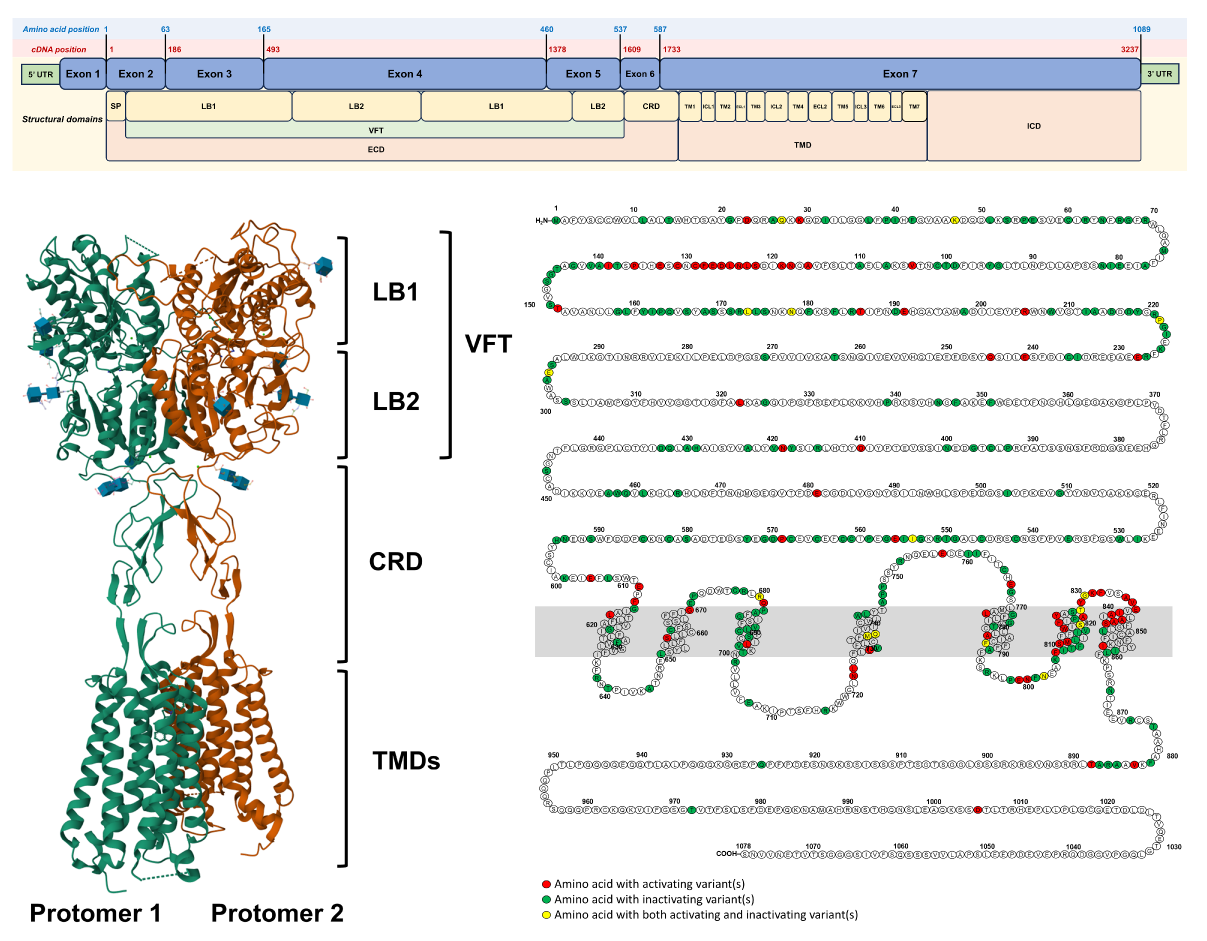
- Pidasheva S, D’Souza-Li L, Canaff L, Cole DE, Hendy GN. Casrdb: calcium-sensing receptor locus-specific database for mutations causing familial (benign) hypocalciuric hypercalcemia, neonatal severe hyperparathyroidism, and autosomal dominant hypocalcemia. Hum Mutat. 2004;24(2):107-111