Oral Presentation ESA-SRB-NZSE-CaSR 2026 in conjunction with ENSA
Efficacy and safety of a standardised insulin infusion protocol for the management of severe hypertriglyceridaemia (143687)
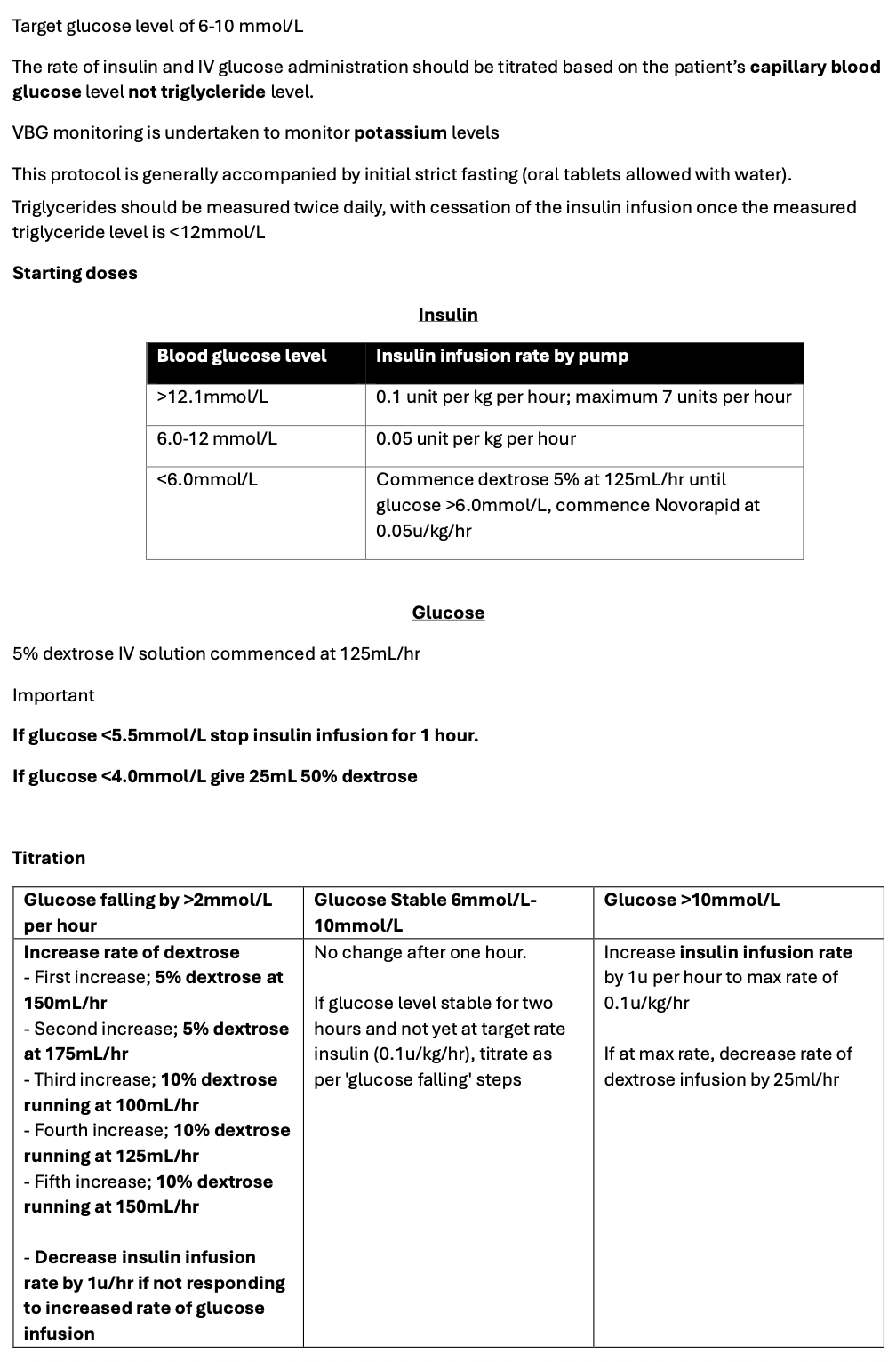
Intravenous insulin infusion in combination with a fat exclusionary diet is widely accepted as the mainstay of treatment of severe hypertriglyceridaemia (>10mmol//L) (SHTG). There is evidence suggesting higher rates of insulin leads to a more effective clearance of triglycerides. We aimed to address heterogeneity in practice by developing a pilot protocol to standardise management at Western Health (WH) (Figure 1). This study compares the safety and effectiveness of a pilot hypertriglyceridemia-specific intravenous insulin protocol in the management of SHTG at WH compared to a previous ward-based insulin infusion protocol for hyperglycaemia.
A retrospective review of all patients managed with intravenous insulin infusion for hypertriglyceridemia was undertaken from the Endocrinology department clinical audit lists for the years 2024 and 2025. We assessed the effect of a hypertriglyceridemia-specific intravenous insulin protocol versus previous care on time to triglyceride normalisation (<10mmol/L), time on insulin infusion, fasting duration, and incidence of hypoglycaemia.
14 and 17 patients were referred in 2024 and 2025 respectively, with a median triglyceride level of 52.9mmol/L (IQR 21.4-106mmol/L) and 51.3mmol/L (IQR 31.3-62.5mmol/L). Pancreatitis prevalence was approximately 65% in both study years. Diabetes mellitus was present in 74% of patients across both cohorts and associated with higher insulin requirements. The 2025 cohort demonstrated a similar median time to target Tg level (45.2hrs[22.8-81.5] vs 48.2hrs[13.4-119.4]), and infusion duration (50hrs[29-71.0] vs 49.3hrs[5.6-89.0]) with a reduced median fasting time (19hrs[15.0-36.0] vs 34.3hrs[5.6-85.0]). Hypoglycaemia occurred more frequently in the 2025 cohort (29% vs 7%), with 8 of 9 events graded as mild >3.1mmol/L. Notably, 6 instances occurred in the management of one patient with GDM.
A hypertriglyceridemia-specific insulin infusion protocol simplified ward-based management, improved the rate of triglyceride clearance, and reduced patient fasting time compared to ad-hoc approaches. Ongoing modification of the protocol has occurred locally to improve rates of hypoglycaemia.